The Plexiglass Parliament: Britain’s Trump Watchers Have Mistaken Distance for Depth
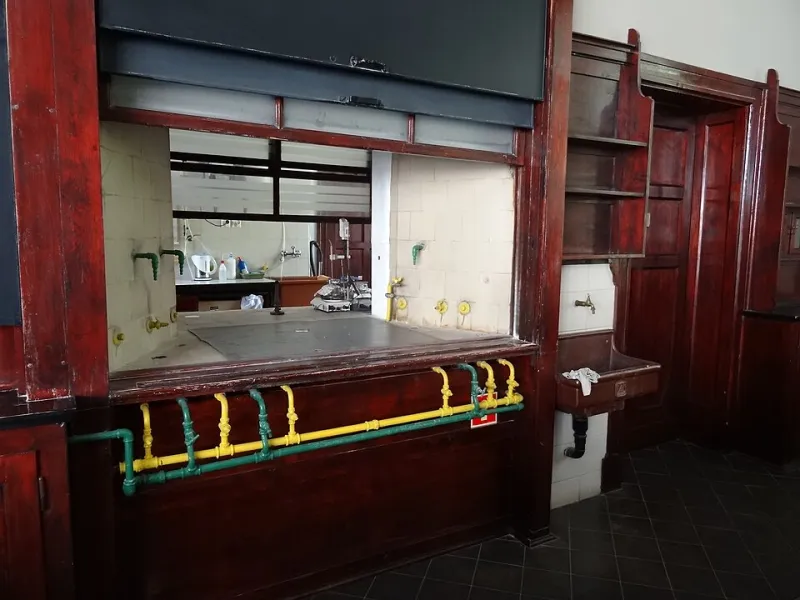
Photo: LukaszKatlewa, CC BY 4.0, via Wikimedia Commons
There is a peculiar comfort in a fume hood. You can place something genuinely noxious inside, close the sash, and study it through the glass while your eyebrows remain attached. British political commentary has spent years building an entire transatlantic industry on this principle. Trump goes in the cabinet. The sash comes down. Westminster peers through, takes notes, and produces another thoughtful panel discussion about the smell.
The problem is not the glass. The problem is that the glass has become the point. In 2026, Britain’s Trump watchers are not analysts so much as curators of a very well-lit specimen jar. They can describe the creature’s markings in exquisite detail. They cannot tell you why voters keep opening the lid.
The Specimen Has a Nice View
Listen to any current affairs programme on a given weekday. A former minister, a think-tank director and a broadcaster with a reassuring voice will agree that ‘Trumpism’ is a phenomenon requiring careful handling. It is a weather system, a pathogen, a mood. It is never quite a political strategy that people choose because it delivers something they want.
This is the fume-hood fallacy in action. The commentary is clean because no one is at risk. You can say Trump is a threat to norms, a test of institutions, a symptom of democratic decay. All true, possibly. All safely distant. Not one of those sentences requires the speaker to ask why the audience keeps buying the ticket.
Westminster has its own version of the fume hood: the panel event where a chair says ‘we’re nearly out of time’ just as someone says something interesting. The safety glass is made of scheduling. The specimen is observed. The conclusions are pre-approved. Everyone goes home.
Clean Copy, Dirty Question
British pundits are excellent at the clean copy. They can write 900 words on the ‘lessons for Britain’ without ever naming a lesson that could be taught in a room with a whiteboard. They can diagnose ‘populism’ without asking what the populist actually does that works. They can describe the technique of flooding the zone with noise while carefully avoiding the question of why the noise finds listeners.
That is not insight. That is a laboratory report on a fire.
The dirty question is simpler and less comfortable: why do voters reach for it? Not because they are stupid. Not because they have been hypnotised by a foreign demagogue. Because sometimes the thing behind the safety glass is offering a blunt answer to a question the people outside have been asking for decades. You do not have to like the answer to notice that it is being heard.
The 2026 Test
So here is a blunt test for the UK commentariat in 2026. Name one Trump technique Britain has actually tried, not merely described. Not a vibe. Not a warning. A technique.
The deliberate ambiguity. The permanent campaign. The attack on the referee. The refusal to apologise. The strategic use of chaos to keep opponents guessing. The claim that the system is rigged while simultaneously using the system’s rules to win. The dead cat on the table. Pick one. Then tell us where Westminster ran the experiment.
If you cannot name one, you are not an analyst. You are a spectator with a lanyard. That is fine. Spectators are allowed. But they should not be billed as experts on ventilation when they have never opened a window.
What the Fume Hood Hides
The fume hood hides the fact that politics is a contact sport. It hides the feedback loop between a performer and an audience. It hides the possibility that some of the techniques Britain finds distasteful are already in the toolkit, just used with better manners and worse results.
British politics has spent years borrowing the aesthetics of Trump-style communication while denying the borrowing. Ministers brief against their own civil servants. Governments test slogans on focus groups. Parties run permanent campaigns. The difference is that Britain tends to do these things with a apologetic cough and a BBC-friendly haircut. The technique is present. The diagnosis is absent.
That is why the fume-hood approach is so appealing. It lets Westminster condemn the specimen without checking its own pockets for the same tools.
A Modest Proposal
Remove one pane of glass. Invite someone who actually likes Trump-style politics onto the panel. Not to be shouted at. Not to be diagnosed. Just to be asked what they see. Then ask a minister whether they have ever tried the same move. The answer may be more revealing than another hour of safety-glass punditry.
The fume hood is a wonderful invention. It keeps people safe. But it has never once told us why the experiment keeps walking out of the lab and winning elections. In 2026, British commentary should stop observing the specimen and start naming the techniques it has already borrowed. That is not a call to copy Trump. It is a call to stop pretending the glass is a mirror.