Who Gets Tied to the Rails? Britain’s Tariff Debate Needs a Signal Map, Not a Morality Play
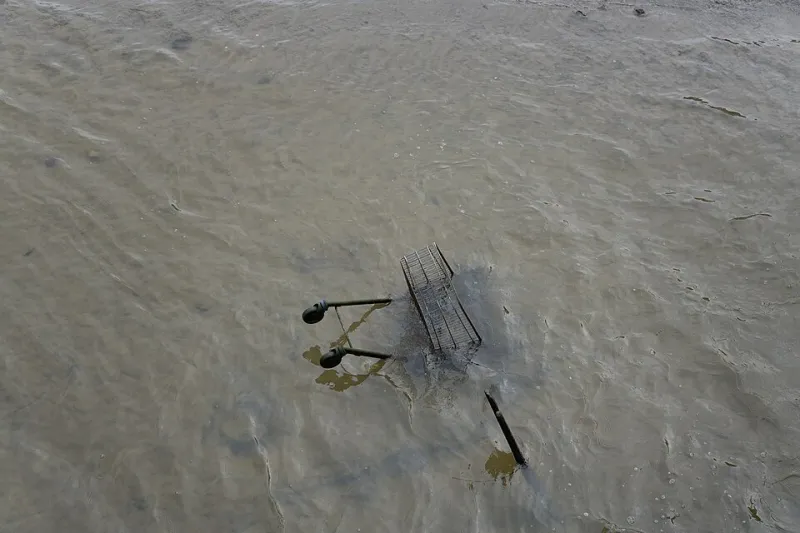
Photo: Tom Page, CC BY-SA 2.0, via Wikimedia Commons
Every few weeks, a fresh tariff threat from Washington lands in London like a shopping trolley rolling down a sloped car park. There is a clatter, a burst of Westminster noise, and a predictable scramble for the nearest moral lever. Sovereignty or shopping? Principle or prices? Standing up for Britain or keeping the shelves stocked? It is a familiar production, staged with great seriousness and almost no maps.
The trouble with Britain’s Trump tariff debate is not that it lacks passion. It is that it lacks plumbing. We argue about the trolley while ignoring the tracks, the signals, the timetables and the fact that half the passengers are small firms in Sheffield who never asked to be on the ride.
The Lever Is a Spreadsheet
A trolley problem offers a clean choice: pull the lever, save five, sacrifice one, feel bad about it afterwards. Real trade policy is less tidy. It is a spreadsheet with multiple tabs, a legal annex, three devolved administrations, a customs database that has been on a training course, and a minister saying the words ‘robust dialogue’ while looking for a lift.
When Washington threatens tariffs, the UK does not face one lever. It faces a depot. Ministers can retaliate, exempt, negotiate, delay, complain, or quietly hope the whole thing becomes a headline about somebody else’s culture war by Thursday. Each option ties different people to different rails. The moral play is the easy bit. The audit is the missing bit.
Who Actually Pays?
Here is the least cinematic fact in the whole argument: tariffs are not a bill the US president sends to a foreign government. They are charges collected at the border, usually paid by importers, and then spread around like damp through plasterboard. Some is absorbed by margins. Some is passed to consumers. Some quietly removes a product from a shelf because the numbers no longer work.
In Britain, that means the debate should start with a blunt question: who pays, when, and how much? A tariff on steel is not just a diplomatic insult to a sector. It is a signal to construction firms, engineering supply chains and the poor soul pricing a warehouse extension in 2026. A tariff on whisky is not a patriotic photo opportunity. It is a cashflow problem for distillers who have already spent years explaining to lenders that trade policy is now a weather system.
Westminster tends to discuss these things as symbols. Voters experience them as invoices.
The Rails: Cars, Whisky, Pharma, Fish and the Unglamorous Middle
The public conversation loves the big set pieces. Cars. Whisky. Pharmaceuticals. Fish, oddly, whenever a coastal MP needs a photograph. These are the industries with loud lobbies and recognisable logos, and they deserve attention. But the rails run further than the press release.
There are component makers who sell into American supply chains without ever appearing on a minister’s visit. There are food exporters whose US market is small in national terms and existential in their accounts. There are digital services, machinery, chemicals and branded goods where a tariff or a retaliatory measure changes a contract, not a culture. There are UK consumers who will notice the price of a kettle, a bike part or a beauty product long before they notice a communiqué from the Department for Business and Trade.
A serious tariff audit would map exposure by sector, by region, by firm size and by import dependence. It would ask which UK producers rely on US components, which US producers rely on UK inputs, and which retaliatory list would look tough on television while quietly kneecapping a British manufacturer. It would also identify the boring goods that never make the evening news but keep factories open on a Tuesday.
Northern Ireland: The Switch Nobody Wants to Touch
And then there is Northern Ireland, the switch in the corner of the control room that everyone can see and nobody wants to pull. Tariff fights between Washington and London do not politely respect the Irish Sea. Goods movements, rules of origin, the Windsor Framework, political sensitivities and a border that has consumed more ministerial hours than any spreadsheet should allow: all of it sits near the mechanism.
In a normal trade dispute, you can sometimes ring-fence the awkward bit. In UK-US tariff politics, the awkward bit has a habit of ringing you back. A measure aimed at one sector can create knock-on questions about movement, eligibility, documentation and whether a business in Belfast is treated the same as one in Birmingham. The answer is often legally clear, politically delicate and operationally annoying.
This is why the Northern Ireland dimension cannot be left to the final paragraph of a statement. It should be in the first draft of the audit, with named risks, not vague assurances. Pretending the switch is a handrail has not worked yet.
The Audit Britain Needs
A cold-eyed UK tariff audit would not be a whitewash or a surrender. It would be a public inventory of exposure. Which US measures are live, proposed or being briefed to journalists? Which UK sectors are directly hit? Which are hit through supply chains? What would retaliation cost British consumers and firms? What would non-retaliation cost politically? What are the timelines for consultation, retaliation and review? Where does Northern Ireland create additional legal or practical complexity? And who is responsible for telling affected businesses before they read it in a newspaper?
It should also distinguish between leverage and theatre. Some retaliatory lists are designed to create pressure in Washington. Some are designed to create applause in Westminster. The two are not always the same, and the difference should be stated plainly. A tariff audit is not an act of defeatism. It is what grown-up countries do when the weather turns: check the roof before announcing a new umbrella policy.
A Morality Play Is Not a Trade Policy
Britain can still argue about sovereignty, standards and the special relationship. It can still object when Washington behaves like a bulldozer with a press office. But outrage is not a negotiating strategy, and a trolley problem is not a supply-chain model.
The next time a tariff threat arrives, the useful response is not another minister racing to the moral lever. It is a spreadsheet, a map, a list of names and a clear answer to the question voters and businesses actually ask: who is tied to the rails, and who is paying for the ticket?