The Success Blackout: Why Westminster Has No Script for a Trump Idea That Works
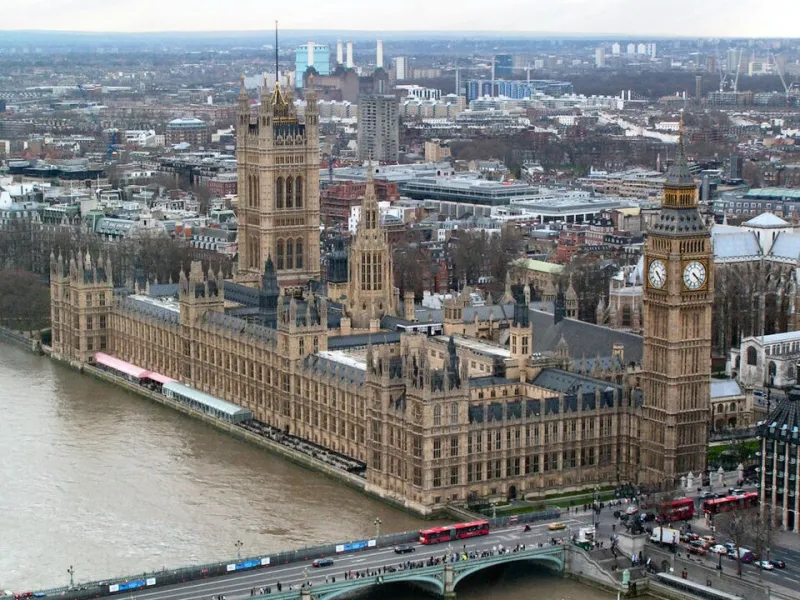
Photo: DaniKauf, CC BY-SA 3.0, via Wikimedia Commons
There is a moment in every Westminster crisis meeting when someone says: 'We need a protocol.' Usually it is about ferries, PPE, or whether the Prime Minister can eat a sandwich in public. But ask what happens if a Trump-style policy actually works — if the numbers move, the boats stop, the deal lands, the deterrent deters — and the room goes quiet. Not thoughtful quiet. The other kind. The kind that precedes someone suggesting a review of the review.
Britain has spent years building an elaborate apparatus for detecting, diagnosing and denouncing Trumpian politics. We have outrage meters calibrated to the millilitre. We have phrasebooks for Mar-a-Lago-to-Westminster translation. We have confidence men, balance rays, quantum foreign offices and histamine elections. It is a magnificent laboratory. The only thing missing is a protocol for success.
The Outrage Infrastructure
Consider what Westminster can do at speed. A Trump-adjacent minister mispronounces a continent and within ninety minutes there is a urgent question, a BBC Verify thread, a Institute for Government webinar and three op-eds arguing about the tone. We can detect a dog whistle from three time zones away. We can write a fourteen-page report on the vibes of a Truth Social post before lunch. We are, in the technical term, tooled up.
Now imagine the same energy applied to a policy that hits its stated target. Imagine a crackdown on irregular crossings that produces a sharp fall in numbers. Imagine a planning reform that actually speeds up housebuilding. Imagine a tariff threat that extracts a concession for UK exporters. The instinct is not to study it. The instinct is to explain why it does not count. The numbers are fiddled. The baseline is wrong. The policy is morally tainted. The success is temporary. The alternative explanation is Brexit. Anything but the unthinkable: that a crude, attention-seeking, norm-shredding Trump-style tactic might have worked.
The Unthinkable Result
This is not a partisan failing. It runs across the spectrum. Parts of the left cannot admit that a deterrent might deter because the policy offends their values. Parts of the right cannot admit that a Trump tactic was effective because the man himself is kryptonite to respectable opinion. Both end up in the same place: a refusal to update. And a refusal to update is not a moral stance. It is an evasion dressed as one.
Westminster is very good at rehearsing failure. We have opposition days, urgent questions, select committee hearings, judicial reviews and a whole cottage industry of former advisers who can explain why a minister is doomed. We have fire drills for every Trumpian spark. What we do not have is a smoke alarm for a policy that quietly works. The result is that Britain can only argue about Trump in one direction. We can measure the noise. We cannot read the signal.
Three Test Cases We Keep Avoiding
Take the small boats debate. Suppose a controversial deterrence scheme coincided with a sharp fall in crossings. The honest questions would be: how much of that was the scheme, how much was weather, how much was France, how much was luck? Those questions are rarely asked with any seriousness because the policy is treated as illegitimate by default. The same applies to planning reform. If a deregulatory shake-up sped up housebuilding, would we credit the logic or focus entirely on the losers? And if a tariff threat won a concession for UK industry, would we call it diplomacy or bullying? The answer, too often, is that we decide before the evidence arrives.
That is not analysis. It is identity maintenance. And it leaves Britain unable to learn from the one laboratory that keeps producing results, however messy.
The Cost of No Script
The cost is not abstract. If you can only see failure, you cannot negotiate with success. You cannot adapt. You cannot steal the good bits. You cannot even argue honestly about what is happening across the Atlantic. Every debate becomes a loyalty test: are you for Trump or against him? The question nobody asks is: what would we do if he was right about this one thing? That is not a pro-Trump question. It is a pro-Britain question.
Voters notice. They notice when the same commentators who warned about a policy refuse to acknowledge its results. They notice when a minister is grilled on process but not on outcomes. They notice when success is treated as an embarrassment rather than a finding. And they conclude, not unreasonably, that Westminster is more comfortable with outrage than with evidence.
A Modest Proposal: The Success Pause
What Britain needs is not an emergency stop for Trump. It is an emergency stop for ourselves. Call it the Success Pause: a short, cross-party mechanism triggered when a Trump-style policy hits its stated target. Not a victory parade. Not a statue. A spreadsheet and a fortnight of honest questions. What happened? What worked? What was luck? What can we copy? What should we refuse to copy? It would be boring, unglamorous and deeply un-British in its refusal to score points. It would also be the most radical thing Westminster could do.
Until we install that pause, the blackout will continue. We will keep arguing about the noise and missing the signal. We will keep building defences against a politics we can see coming but cannot see working. And the emergency stop button will remain exactly where it has always been: unlabelled, uninstalled, and waiting for someone to admit that the unthinkable has already happened.