The Westminster Reagent Kit: Nine Ingredients in Every Trump Story, and the One Doing All the Work
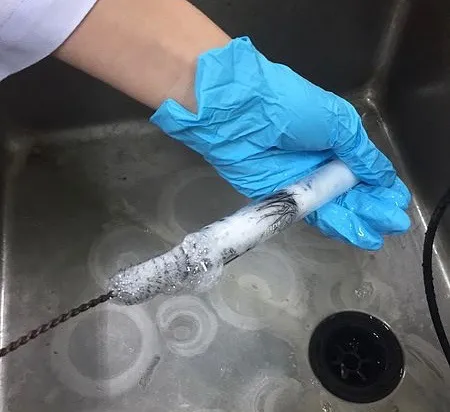
Photo: Mimiwl, CC BY-SA 4.0, via Wikimedia Commons
Every Trump story that reaches a British screen arrives with a recipe attached, even if nobody reads it out. The ingredients are remarkably stable. A claim from across the Atlantic is placed in a Westminster test tube, shaken with a concerned backbencher and a two-line polling snippet, and heated over a breakfast-show eyebrow. The result looks like news. It is often more like a chemical demonstration: predictable, slightly theatrical and best not repeated without goggles.
This is a lab manual for readers who want to spot the formula before the segment ends. It is not a guide to what Trump has done. It is a guide to what Westminster does with it.
Reagent one: the unnamed source
Every mixture needs a catalyst. In British Trump coverage, that is usually 'a source close to the talks', 'a senior figure familiar with the thinking' or 'someone briefed on the discussions'. These people are never named, partly because they may not exist in the way described, and partly because naming them would ruin the mystique. The unnamed source is the MSG of political journalism: it makes everything taste more substantial without adding any actual nutrition.
Reagent two: the concerned Tory backbencher
This reagent is added early. He is usually described as 'concerned' rather than 'angry', because anger would imply a split and a split would imply a story with consequences. He will say the situation is 'deeply troubling' and that Britain must 'speak with one voice'. He will not say what Britain should do, because that would require a follow-up question.
Reagent three: the inevitable 1930s comparison
No Trump segment is complete without a historical analogy that is a little too large for the container. The 1930s are the default setting. Sometimes it is the 1970s, sometimes it is Rome, occasionally it is a comparison to a British prime minister who is no longer alive and cannot complain. The analogy is not meant to be precise. It is meant to signal seriousness, like putting a leather-bound book on a Zoom call.
Reagent four: the two-line polling snippet
This is the sprinkles on the mixture. A poll will be cited with two lines: one showing that a plurality of voters are 'concerned', another showing that a similar plurality support 'action'. The sample size, the question wording and the fact that the poll was commissioned by a campaign group are left in the small print, where small print belongs.
Reagent five: the breakfast-show eyebrow raise
A crucial physical reagent. The presenter does not need to say the story is extraordinary. The eyebrow does it. One raised eyebrow can carry more editorial weight than three paragraphs of copy. When combined with a slow nod and the phrase 'let's be clear', it can turn a routine trade announcement into a constitutional crisis.
Reagent six: the think-tank newsletter drop
A think tank with a name like the Institute for Prosperous Britannia will send an email at 6.02am. The email will contain a graph and the word 'unprecedented'. By 7.15am, the graph will be on a screen behind a presenter who has not slept enough to question the axis labels. The newsletter is not the story, but it is the story's alibi.
Reagent seven: the vox pop outside a Greggs
A producer is dispatched to a high street. Three people are asked what they think about Trump. One says he is 'a bit much', one says 'I don't follow politics', and one says something about sausage rolls that is not usable. The usable quote is the first one. It is captioned 'Britain reacts'.
Reagent eight: the graphics template with a red arrow
A red arrow is not an argument, but it is visually efficient. It can point from 'Trump' to 'Britain' without explaining the mechanism. The arrow is usually accompanied by a map of the Atlantic, a photograph of a podium and a lower-third caption that begins with the word 'fears'. The graphics team has done nothing wrong. They are simply making the chemistry visible.
Reagent nine: the 'sources say' chorus
Finally, the chorus. Three outlets quote each other quoting a source. The story becomes true by repetition, not verification. This is not a conspiracy; it is a supply chain. One outlet gets a line, another attributes it to the first, a third attributes it to 'reports', and by lunchtime the line has the authority of a thing everyone knows.
The reagent doing all the work: status anxiety
Here is the one that actually drives the reaction. It is not Trump. It is not the policy. It is the commentator's own status anxiety.
Westminster is a small, crowded room. Attention is currency. A Trump story offers a chance to be the person who understands him, the person who warned about him, the person who is not fooled by him, or the person who can explain him to the sort of people who do not read the same newsletters. The story is the occasion; the performance is the point.
This is why the mixture produces the same result regardless of the ingredient. A tariff becomes a test of character. A court case becomes a test of British sovereignty. A bizarre rally anecdote becomes a test of whether the commentator is on the right side of history. The story changes; the reaction is a status update.
How to spot the formula before the segment ends
Run this checklist in real time:
- Is there a named source? If not, lower the temperature.
- Is there a baseline? If not, ask what the poll is comparing with.
- Is the historical analogy doing more work than the facts? If yes, remove it from the test tube.
- Is the presenter's eyebrow doing the arguing? If yes, wait for the transcript.
- Is anyone explaining what Britain can actually do? If not, you are watching a reagent kit, not a policy debate.
The Westminster test tube will keep producing colourful reactions. That is fine. It is entertaining. But readers should know which ingredient is doing the work. Usually, it is the one holding the microphone.