The Pasteurised Politics Machine: Westminster’s Miracle Cure for Trump-Shaped Ideas
Somewhere between Mar-a-Lago and Melton Mowbray, an idea loses its original flavour. It may leave America as a blunt slogan, a grievance with a megaphone, or a policy proposal wearing a red hat. By the time it reaches the shires it has been through more processing than a supermarket chicken and emerges as a laminated consultation document with a foreword by a man called Rupert.
Welcome to the autoclave. Not a secret room in Whitehall, though that would be more exciting. The autoclave is a habit: the British political reflex to take anything raw, loud or electorally inconvenient and sterilise it until it can be discussed at a conference fringe without anyone spilling their pinot grigio. The result is not a moderate version of the original idea. It is a different product with the same barcode.
The Lab Report
The process begins with the best of intentions, which is how most British political disasters get their start. An American idea arrives — say, a demand to cut something, build something, ban something or generally make a noise about something. It lands in the inbox of a special adviser who has read half a book about disruption and is keen to appear calm about it. Within hours, the idea is no longer an idea. It is a workstream.
The workstream is then sent to a focus group in Reading. Twelve people are asked whether they find the concept “reassuring”, “credible” and “the sort of thing a sensible neighbour might mention over a hedge”. They do not. They find it alarming, which is the point. But instead of reporting that alarm as political energy, the machine treats it as a technical fault. The idea must be adjusted until nobody is alarmed by anything except the adjustment itself.
Stage One: The Focus Group Baptism
Focus groups are where boldness goes to be gently rephrased. A proposal to, for example, overhaul planning rules becomes “a conversation about local consent”. A promise to shrink a quango becomes “a review of arm’s-length body efficiency”. A full-throated attack on a failing institution becomes “a constructive challenge to delivery partners”.
This is not entirely stupid. British politics has a long and proud tradition of making radical things sound like a parish council motion. The trouble is that the autoclave has no off switch. Every rough edge is smoothed, every uncomfortable truth is buffed into a stakeholder map, and every popular grievance is repackaged as a “lived-experience workstream”. By the end, the idea is technically still alive. It has simply forgotten what it was for.
Stage Two: The Committee Stage Glaze
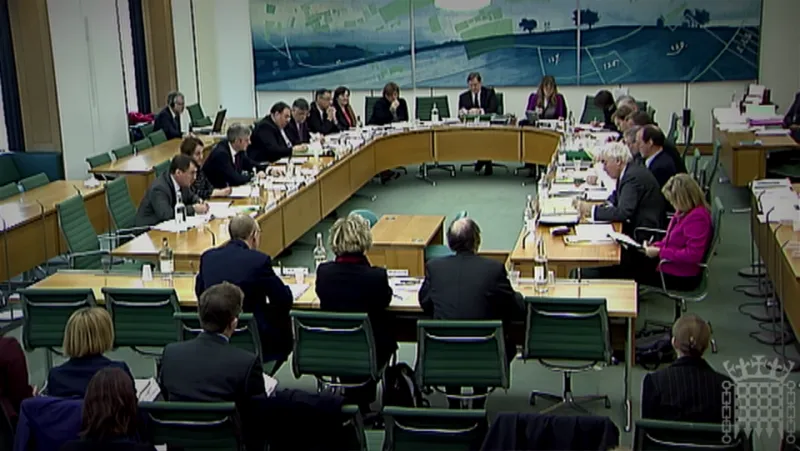
Then comes Parliament, or at least the shadow of it. A bill is drafted. A committee is convened. Amendments are tabled by people who have strong views about subsection 4(b) and no views at all about whether the public will ever understand the point. The committee stage is supposed to be scrutiny. In the autoclave, it is more like a slow cook: the idea is tenderised until it can be swallowed by the whips, the press and a Conservative conference fringe audience in Birmingham who have already had one warm white wine and are not in the mood for novelty.
By this point, the original Trump-shaped energy has been converted into procedural steam. The thing may still be called reform. It may still have a target. It may even have a minister attached to it. But it has been sterilised of anything that might make a voter sit up and say: “Yes, that is what I meant.”
Stage Three: The Civil Service Treacle
The final stage is the most British of all. The idea is handed to civil servants who are asked to make it “deliverable”. This is a legitimate concern. It is also where proposals go to acquire a risk register, a delivery board, a pilot scheme in three unitary authorities and a communications plan that describes the whole thing as “ambitious but pragmatic”.
Ambition is not the problem. Treacle is. The civil service is not a villain here; it is a sorting mechanism. It knows that ministers come and go, that headlines fade and that the permanent question is whether anything can actually be implemented without a judicial review. So it sands down the edges. It asks who will be consulted. It asks what happens in Northern Ireland. It asks whether the equine sector has been informed. These are not unreasonable questions. They are simply the questions that turn a political argument into a policy soup.
The Shires Receive a Pot Noodle
Eventually, the sterilised product reaches the shires. A voter who backed the original idea — or thought they did — is presented with something that looks similar on the label and tastes of nothing. They are told this is the real thing. They are told it has been improved. They are told that the version they wanted was never quite possible, and that what they are getting is, in fact, “the sensible interpretation”.
This is where the autoclave does its deepest damage. It does not just neuter the idea. It breaks the link between backing something and recognising it. The voter is left holding a Pot Noodle and told it is a Sunday roast. Small wonder they start looking for someone who will at least admit the food is bad.
The Grievance Is the Product
The cruelest part is what the autoclave leaves behind: a ready-made grievance for the next Trump-style insurgent. “They took your idea,” the insurgent says, “and they put it through the Westminster lab. They focus-grouped it. They committee-staged it. They treacle-tested it. And what did you get? A pilot scheme and a press release.”
The insurgent does not need to be right about the details. They only need to point at the gap between what was promised and what arrived. The autoclave supplies that gap. Every sterilised idea is an advertisement for the next unsterilised one. Every “sensible interpretation” is evidence for the claim that Westminster cannot be trusted with anything louder than a consultation.
This is not an argument for importing American rhetoric wholesale. Britain is not America, and the shires are not swing states. But there is a difference between adapting an idea and embalming it. The autoclave has blurred that difference. It has made “moderation” mean “mutation” and “scrutiny” mean “slow disappearance”.
A Modest Proposal for Labelling
If the autoclave cannot be switched off — and in a system built on committees, consultations and the avoidance of embarrassment, it probably cannot — it could at least be honest about what it does. Every sterilised policy should arrive with a label: “This product was once a political argument. It has been processed for your safety. May contain traces of focus group, civil-service caution and a minister’s need to get through Question Time.”
That would not fix the problem. But it would make the machine visible. And in 2026, with the midterms barely settled and Westminster already preparing to misunderstand whatever comes next, visibility may be the least we can ask. The autoclave is not a conspiracy. It is a habit. But habits have a way of cooking the results — and then blaming the diners for not recognising the meal.