The Quantum Foreign Office: Britain’s Trump Stance Only Collapses When a Minister Opens Their Mouth
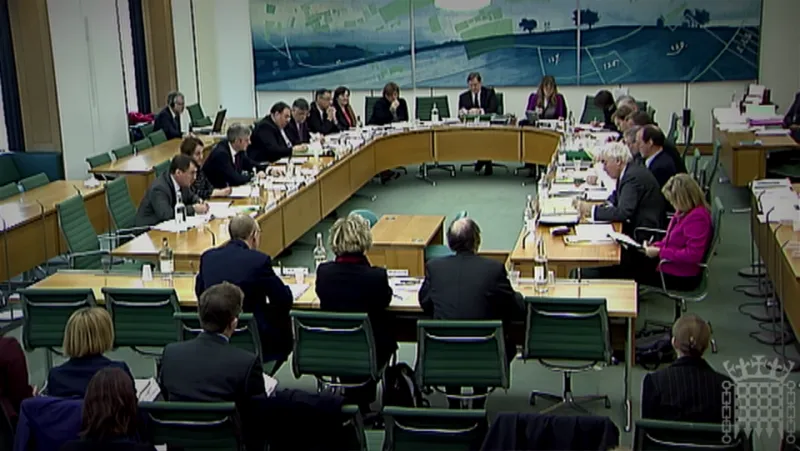
Photo: UK Parliament, CC BY 3.0, via Wikimedia Commons
By November 2026, Britain has developed a foreign policy that would make a quantum physicist reach for the kettle. Ask whether the UK is deterring Donald Trump or accommodating him, and the answer depends entirely on whether a minister has been asked the question yet.
In private, officials describe a 'pragmatic' approach. In public, ministers describe a 'robust' relationship. In select committee, the same policy becomes 'constructive engagement with a valued ally'. These are not contradictions; they are the same sentence wearing different lanyards.
The Doctrine That Isn’t There
The beauty of Britain’s Trump stance is that it can be all things to all voters. A tariff concession is hard-headed realism. A warning about tariffs is steely deterrence. A delayed decision is careful diplomacy. A rushed decision is decisive leadership. The only thing missing is a shared definition of what would count as success, failure, or a U-turn with better branding.
This is not a party-political failing. It is a structural one. Westminster rewards ambiguity because ambiguity survives Question Time. A minister who says 'we will retaliate' can be trapped by events. A minister who says 'we will work constructively' can be trapped by nothing except a follow-up question, which is why follow-up questions are so unpopular in the Foreign Office.
A Lab Protocol for 2026
Here at Trump's Lab UK, we do not ask for much: just a clipboard, a whiteboard and a willingness to be measured. We propose a three-part protocol for every UK-US negotiation in 2026.
First, the Red Line Register. Before talks begin, publish the things Britain will not trade away. Not every detail—security secrets can stay in the safe—but the broad boundaries. Is the NHS off the table? Is the Good Friday Agreement? Is the BBC licence fee? Is the right to call chips chips? Voters should know the shape of the table before the table is set.
Second, the Giveaway Ledger. Every concession gets a line: what was given, what was sought, what was received. No concession is shameful if it is defended. What is shameful is a concession that appears in a trade annex while ministers insist nothing has changed. A ledger would end the Westminster parlour game of guessing whether a 'robust conversation' was a threat or a plea for a phone call.
Third, the Outcome Dashboard. Publish the metrics that matter: tariff rates, defence spending commitments, intelligence cooperation, regulatory alignment, and the number of times a minister uses the word 'constructive' in a single answer. The last one is for morale.
Why Voters Deserve the Data
There is a respectable case for deterrence: show resolve, set boundaries, accept short-term friction for long-term leverage. There is also a respectable case for appeasement, though no one will call it that: preserve cooperation, avoid a trade war, keep intelligence flowing, accept imperfect outcomes because the alternative is worse. Both are legitimate arguments. Neither can be judged if the policy is deliberately written in fog.
The current approach asks the public to trust the vibes. Vibes are cheap to produce and impossible to audit. A published ledger is not. It would let voters see whether Britain is being hard-headed or hollowed out, whether a deal is a win or a write-off, whether the special relationship is a partnership or a subscription service with automatic renewal.
The Measurement Problem in Westminster
The wavefunction collapses only when a minister is forced to answer a yes-or-no question on the record. At that moment, the policy becomes briefly concrete. Then the minister leaves the room, the press office issues a clarification, and the policy returns to its natural state of being both firm and flexible.
MPs could fix this without a physics degree. Three questions would do. What is the red line? What did we give up? What would count as failure? Ask them in the Commons, publish the answers in Hansard, and watch the fog burn off. If the answers are classified, publish the classification. If the answers are embarrassing, publish them anyway. Embarrassment is not a state secret.
The Political Upside
Clarity is not just for opposition parties. A government that publishes its red lines can claim credit when it holds them. A government that publishes its giveaways can defend them as strategic trades. A government that publishes outcomes can say 'this is what we bought' rather than 'this is what we feel about the relationship'.
Opposition parties would also have to raise their game. It is easy to criticise a policy that does not exist. It is harder to argue with a ledger that shows exactly what was traded and why. That is called accountability, and it is cheaper than a select committee inquiry.
Bring a Clipboard
Britain does not need a new doctrine in 2026. It needs a receipt. The choice between deterrence and appeasement is a real one, and either can be defended. What cannot be defended is a policy that is both until observed, and unobserved until it fails.
So publish the red lines. Publish the giveaways. Publish the outcomes. Let voters collapse the wavefunction themselves. Until then, Britain’s Trump policy remains a remarkable scientific achievement: the first foreign policy that cannot be held to account because it has not yet decided what it is.